
Skip to content
Mead & Hunt logo
  • Markets
    • Aviation
    • Cultural Resources
    • Education
    • Federal
    • Food & Beverage
    • Justice
    • Renewable Energy
    • State & Local
    • Transportation
    • Water
  • Services
    • Architecture & Interiors
    • Commissioning
    • Construction Services
    • Engineering
    • Environmental
    • Fabrication & Custom Manufacturing
    • Planning
    • Sustainability & Resilience
    • Technology & Security
  • Portfolio
  • News
  • About
    • Purpose & Values
    • Meet Our Team
    • Inclusion & Belonging
    • Corporate Responsibility
    • Locations
    • Scholarship Opportunities
    • Our History
    • Mead & Hunt Foundation
  • Careers
  • Markets
    • Aviation
    • Cultural Resources
    • Education
    • Federal
    • Food & Beverage
    • Justice
    • Renewable Energy
    • State & Local
    • Transportation
    • Water
  • Services
    • Architecture & Interiors
    • Commissioning
    • Construction Services
    • Engineering
    • Environmental
    • Fabrication & Custom Manufacturing
    • Planning
    • Sustainability & Resilience
    • Technology & Security
  • Portfolio
  • News
  • About
    • Purpose & Values
    • Meet Our Team
    • Inclusion & Belonging
    • Corporate Responsibility
    • Locations
    • Scholarship Opportunities
    • Our History
    • Mead & Hunt Foundation
  • Careers
Mead & Hunt logo
  • Markets
    • Aviation
    • Cultural Resources
    • Education
    • Federal
    • Food & Beverage
    • Justice
    • Renewable Energy
    • State & Local
    • Transportation
    • Water
  • Services
    • Architecture & Interiors
    • Commissioning
    • Construction Services
    • Engineering
    • Environmental
    • Fabrication & Custom Manufacturing
    • Planning
    • Sustainability & Resilience
    • Technology & Security
  • Portfolio
  • News
  • About
    • Purpose & Values
    • Meet Our Team
    • Inclusion & Belonging
    • Corporate Responsibility
    • Locations
    • Scholarship Opportunities
    • Our History
    • Mead & Hunt Foundation
  • Careers
  • Markets
    • Aviation
    • Cultural Resources
    • Education
    • Federal
    • Food & Beverage
    • Justice
    • Renewable Energy
    • State & Local
    • Transportation
    • Water
  • Services
    • Architecture & Interiors
    • Commissioning
    • Construction Services
    • Engineering
    • Environmental
    • Fabrication & Custom Manufacturing
    • Planning
    • Sustainability & Resilience
    • Technology & Security
  • Portfolio
  • News
  • About
    • Purpose & Values
    • Meet Our Team
    • Inclusion & Belonging
    • Corporate Responsibility
    • Locations
    • Scholarship Opportunities
    • Our History
    • Mead & Hunt Foundation
  • Careers

Resilience by Design: Practical Choices Pay Off Long-Term

  • April 23, 2026
Smiling engineers and resilience planners gather around a worktable set with blueprints and a hard hat in a building where warm sunlight slants through tall windows.

In conversations about infrastructure and building design, resilience is often framed as a luxury, something added only when budgets allow or failures force the issue. But resilience doesn’t need to be expensive. In fact, when integrated early, resilient design can be one of the most cost-effective investments an owner makes, particularly in projects facing tight budget constraints. 

Waiting to address risk and potential hazards, natural or manmade, almost always costs more than planning for it up front. We should view resilience in design as an upfront investment that pays dividends in future savings. 

Planning Your Approach to Inevitable Risk 

Every building will face hazards over its lifetime. Owners who plan for these events before they happen spend less and recover faster than those who wait. 

When teams identify risks early in the design process, owners can make informed decisions to reduce long‑term risk without increasing upfront costs. Simple strategies such as improved envelopes, passive survivability features, and durable materials deliver returns over the life of a facility. These approaches reduce maintenance and downtime while protecting occupant health and safety. 

The National Academy of Engineering supports this approach, noting that risk-based design improves benefit-cost outcomes and strengthens infrastructure performance. 

What Preplanning Looks Like in Action 
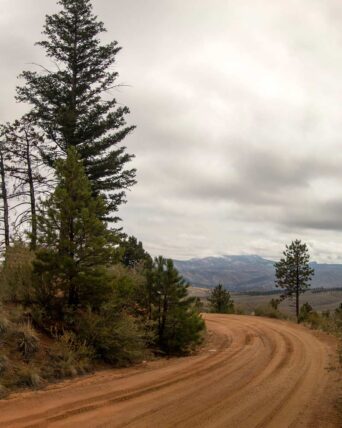
Buffalo Creek National Park, ColoradoThe Buffalo Creek Work Center, part of the US Forest Service infrastructure in Colorado, shows how incorporating resilience into design prevents problems down the road. 

The facility sits in a small mountain community that faces recurring wildfires, flooding, and extreme weather. During the design phase, the project team evaluated hazards the building would face over its lifetime.  

Their analysis identified budget-conscious options, including higher-rated MERV 13 filters to address wildfire smoke, impact-resistant roofing, and raised stem walls to reduce flood risk. Each choice addressed a specific, known threat while respecting budget constraints. The result is a facility prepared for real conditions, designed to better serve the community depending on it. 

Resilience with Intention 

Approaching resilience as risk management makes it accessible to projects of any size or budget. Research shows that early strategies, such as passive design and energy efficiency, deliver measurable value over time. For small communities and public agencies with limited resources, “right‑sized” solutions still offer the benefits of resilience: lower repair costs, continuity of operations, occupant well‑being, and long‑term durability.  

headshot of julie edwards

Julie Edwards

Julie Edwards is a senior sustainability consultant with more than two decades of experience helping teams design more sustainable buildings and resilient infrastructure for our communities. With a background in architecture, Julie works across housing, municipal, office, and education projects, finding ways to turn clients’ sustainability goals into real-world solutions. Several of her projects have received LEED Platinum recognition. Outside of work, Julie enjoys spending time in the mountains, landscaping, nature photography, and exploring a variety of art mediums. 

Linkedin Envelope Readme
PrevPrevious
NextNext

Most Popular

Mead & Hunt Names Kristin Moore as CFO
July 10, 2026
America’s 250th: A Tavern, a Revolution, and 100,000 Artifacts
July 1, 2026
New Report Explores Opportunities and Challenges of AI in Airport Security
June 24, 2026
Evaluating Ohio’s Postwar Neighborhoods: A New Framework for Preservation and Compliance
June 22, 2026

Main Menu

  • Home
  • Markets
  • Services
  • Portfolio
  • News
  • About
  • Careers
  • Home
  • Markets
  • Services
  • Portfolio
  • News
  • About
  • Careers

Useful Links

  • Ebids
  • Corporate Responsibility
  • Equipment & Parts
  • GSA Schedules Program
  • Government Contract Vehicles
  • Policy for Third-Party Recruiters
  • Transparency in Coverage
  • Ebids
  • Corporate Responsibility
  • Equipment & Parts
  • GSA Schedules Program
  • Government Contract Vehicles
  • Policy for Third-Party Recruiters
  • Transparency in Coverage

Get in touch

  • Apply Today
  • Contact Us
  • Locations
  • Title VI
  • Apply Today
  • Contact Us
  • Locations
  • Title VI

Connect with us

Linkedin Facebook Instagram Vimeo

© 2026 Mead & Hunt, Inc. All rights reserved.

Privacy Settings | Privacy & CCPA Policy | Do Not Sell | Site Map