Architects and engineers have their share of friendly rivalry.
“Architects only care how the building looks, the way it stands up is the engineer’s problem.”
“Engineers only care about an efficient structure, they don’t care about how the building looks.”
At least, that’s how the joke goes. As someone licensed in both disciplines, I tend to blur the lines of this joke, because I know, beneath the stereotypes, is a shared love of solving problems. And few materials invite architects and engineers to solve them together quite like mass timber.
In the previous blogs on mass timber, Josh discussed the shift in design process between architects and structural engineers when working with mass timber. Rachel referenced the history of using mass timber and its proven calming impact on the human experience. Of course, I agree with them both, but I keep in mind the foundational principle of design: problem-solving.
How Do Architects and Engineers Problem-Solve?
Since I’m a Chicago-based architect, it probably won’t surprise you to learn that I’m partial to “Modern” Architecture.
Yes, Modern Architecture. The design movement that resulted in the exact same black box high-rise copied and pasted all over Chicago. I can’t tell you how many times I’ve heard critics describe these buildings as “boring and sad.” The forms are simple: just extruded boxes, clad in steel and glass, with open floor plans adaptable to whatever function. Everything is painted black.
While these buildings may not appear impressive compared to more contemporary building designs, the sentiment at the time it was built was different. Steel building construction was relatively new; prior to that, we could only construct buildings with masonry walls. It just wasn’t possible to design tall buildings. Therefore, a high-rise building’s form wasn’t flashy in hopes of grabbing a viewer’s attention, it was a response to real problems folks were facing in the 1900’s: how to fit more building area into a limited amount of space.
The character of the high-rise resulted from a problem that needed solving. The only decorative detail on Mies Van Der Rohe’s skyscrapers was the steel members attached to the exterior of the façade, meant to represent the steel superstructure hidden inside (and provide rails for the window-washing platforms to attach to, never waste an opportunity for efficiency). The solution to the problem – a very tall building – was enough to captivate occupants and designers alike, no additional flourish required.
The industry has come a long way since then, but the core principle of problem-solving remains. So why am I bringing up steel construction in a mass timber blog post?
What Problems Need Solving Today?
Today, we have new problems that designers need to address.
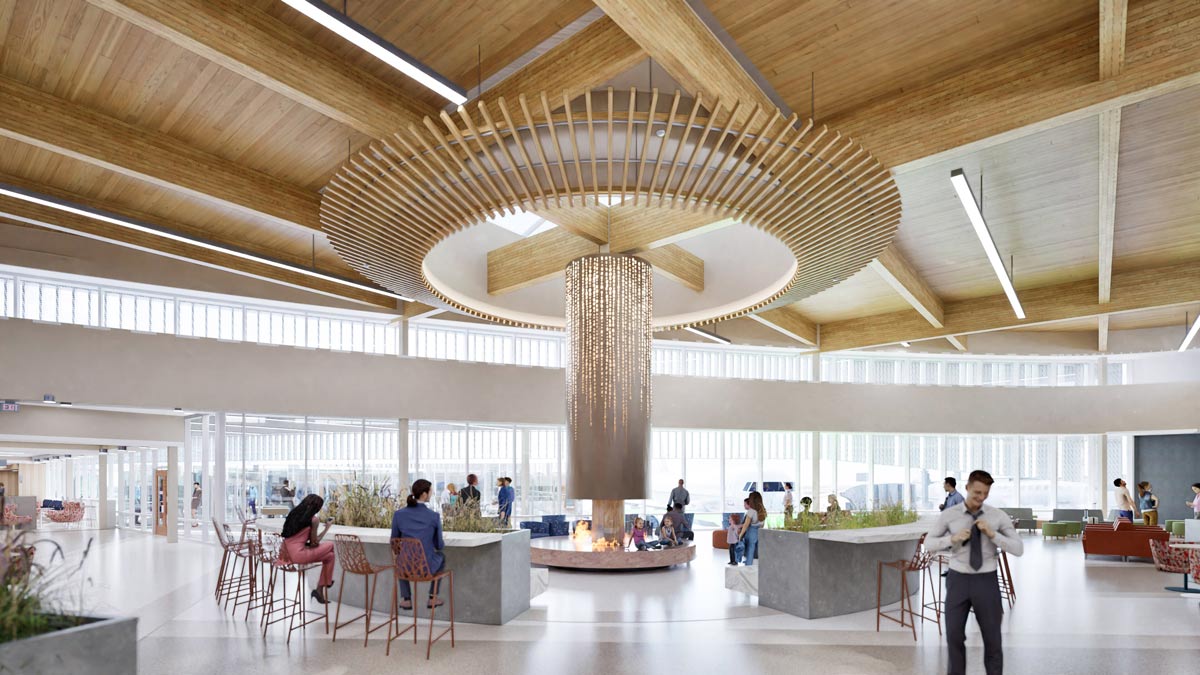
There are many reasons to appreciate mass timber. One of those reasons is that mass timber improves an occupant’s quality of life. As Josh and Rachel noted earlier in this blog series, exposed wood brings a natural comfort that soothes us. The look of the grain and the visual warmth of the finish simply cannot be replicated with steel or concrete. But more importantly, using mass timber in place of more commonplace structural systems helps us push back against the carbon emissions resulting from our building designs. Exposed mass timber celebrates our ability to solve problems, much like the modern skyscrapers of the 1900s did for an earlier generation.
It’s easy to make a pro-mass timber argument. As Josh and Rachel pointed out in their blogs, mass timber helps occupants feel more at ease, it is better for the environment than concrete or steel, and it helps architects and engineers learn to be a unified front. So why are we not designing more mass timber buildings?
How Can We Bring Mass Timber into More Projects?
Although “Mass Timber” floor systems are relatively new technology, “Heavy Timber” construction has been around for ages. So why has mass timber not taken hold of the industry in a more commanding way? The short answer is: change.
Just like the architects and engineers of the 1900s – who were designing (at that time, novel) steel high-rise buildings – today’s designers, contractors, and stakeholders may not be familiar with mass timber construction compared to conventional systems.
Architects and engineers may request higher fees to compensate for the liability of designing something they are unfamiliar with. Contractors feel added pressure to meet tight deadlines on a small budget. The limited number of available mass timber manufacturers may lead contractors to push back on, or inflate, the construction cost of mass timber buildings. Stakeholders may feel unease with the lack of long-term data on mass timber structural systems and associated insurance rates.
These setbacks can get in the way of problem-solving, but it’s important to acknowledge that they stem from unfamiliarity and the financial value associated with change. We know, however, that change is the catalyst for innovation.
As architects and engineers design more mass timber buildings, demand, expertise, and data will pour in to offset the “change premium.” Once we move on from these growing pains as an industry, we can more regularly use mass timber as a problem-solving tool to create buildings for all to enjoy. Each project moves us closer to a future where mass timber is a practical, proven tool for solving design challenges and creating places people value.