
Skip to content
Mead & Hunt logo
  • Markets
    • Aviation
    • Cultural Resources
    • Education
    • Federal
    • Food & Beverage
    • Justice
    • Renewable Energy
    • State & Local
    • Transportation
    • Water
  • Services
    • Architecture & Interiors
    • Commissioning
    • Construction Services
    • Engineering
    • Environmental
    • Fabrication & Custom Manufacturing
    • Planning
    • Sustainability & Resilience
    • Technology & Security
  • Portfolio
  • News
  • About
    • Purpose & Values
    • Meet Our Team
    • Inclusion & Belonging
    • Corporate Responsibility
    • Locations
    • Scholarship Opportunities
    • Our History
    • Mead & Hunt Foundation
  • Careers
  • Markets
    • Aviation
    • Cultural Resources
    • Education
    • Federal
    • Food & Beverage
    • Justice
    • Renewable Energy
    • State & Local
    • Transportation
    • Water
  • Services
    • Architecture & Interiors
    • Commissioning
    • Construction Services
    • Engineering
    • Environmental
    • Fabrication & Custom Manufacturing
    • Planning
    • Sustainability & Resilience
    • Technology & Security
  • Portfolio
  • News
  • About
    • Purpose & Values
    • Meet Our Team
    • Inclusion & Belonging
    • Corporate Responsibility
    • Locations
    • Scholarship Opportunities
    • Our History
    • Mead & Hunt Foundation
  • Careers
Mead & Hunt logo
  • Markets
    • Aviation
    • Cultural Resources
    • Education
    • Federal
    • Food & Beverage
    • Justice
    • Renewable Energy
    • State & Local
    • Transportation
    • Water
  • Services
    • Architecture & Interiors
    • Commissioning
    • Construction Services
    • Engineering
    • Environmental
    • Fabrication & Custom Manufacturing
    • Planning
    • Sustainability & Resilience
    • Technology & Security
  • Portfolio
  • News
  • About
    • Purpose & Values
    • Meet Our Team
    • Inclusion & Belonging
    • Corporate Responsibility
    • Locations
    • Scholarship Opportunities
    • Our History
    • Mead & Hunt Foundation
  • Careers
  • Markets
    • Aviation
    • Cultural Resources
    • Education
    • Federal
    • Food & Beverage
    • Justice
    • Renewable Energy
    • State & Local
    • Transportation
    • Water
  • Services
    • Architecture & Interiors
    • Commissioning
    • Construction Services
    • Engineering
    • Environmental
    • Fabrication & Custom Manufacturing
    • Planning
    • Sustainability & Resilience
    • Technology & Security
  • Portfolio
  • News
  • About
    • Purpose & Values
    • Meet Our Team
    • Inclusion & Belonging
    • Corporate Responsibility
    • Locations
    • Scholarship Opportunities
    • Our History
    • Mead & Hunt Foundation
  • Careers

Can Less Parking Add Up to Better Communities?

  • October 21, 2025
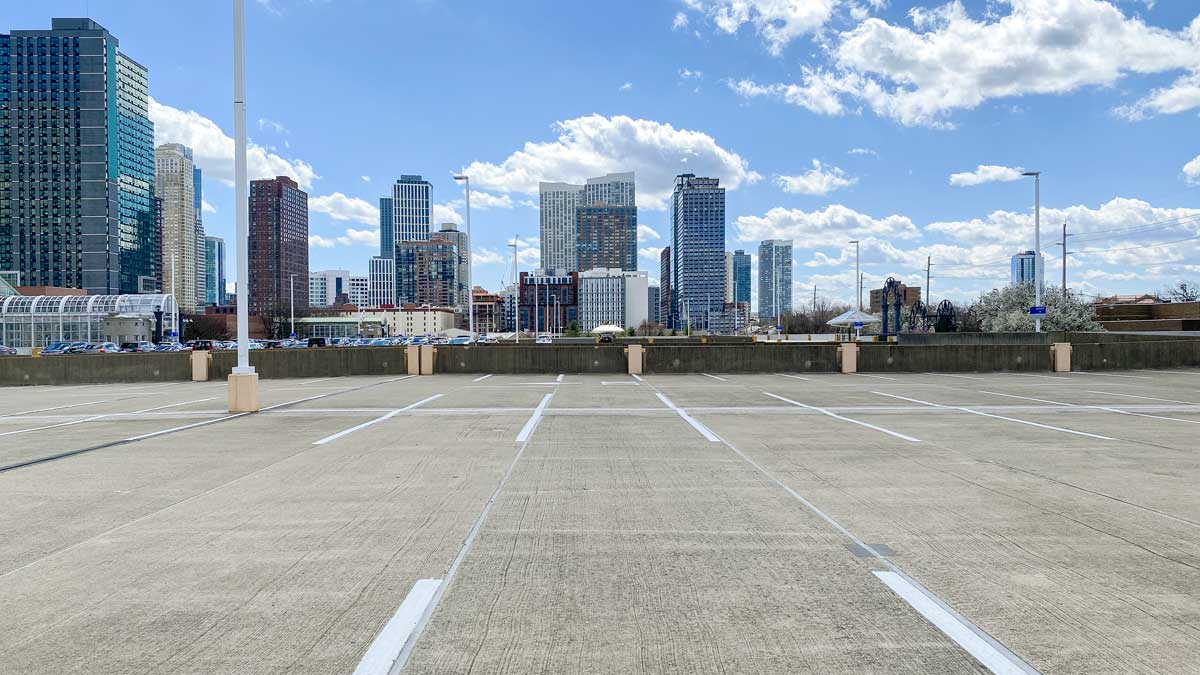
empty parking lot in front of a city skyline under blue skies with fluffy clouds

In recent years, transportation and city planners have advocated for reducing or eliminating parking minimums through zoning and code regulations that require a minimum number of parking spaces for new developments, replacing them with parking maximums. The long-held assumption was that communities should be built around automobile transportation with convenient parking as the net societal benefit. Today, we are rethinking that approach. Let’s challenge those previous assumptions and take a closer look at the benefits of limiting parking in our communities.

What Are Parking Maximums and Minimums?

Parking maximums are rules that cap the number of parking spaces a development can build. They are an increasingly popular tool for creating more livable, sustainable cities. Traditionally, cities imposed minimum parking requirements, mandating a set number of parking spots for each land use type. The minimum parking requirements were often arbitrary, and they varied from city to city. But this outdated model has led to overbuilt parking, increased housing costs, detriment to mixed-use and walkable communities, and car-centric suburban sprawl. Parking maximums flip this script and offer a more balanced, forward-thinking approach to urban development.

Historically, parking minimums were enacted to ensure that each development of land use met parking demands onsite without requiring surplus street parking or public parking infrastructure.

From Parking Lots to Vibrant Neighborhoods

One of the biggest benefits of establishing parking maximums is the promotion of more affordable housing. Building parking is expensive, between $25,000–$50,000 per space in structured garages. These costs are typically passed on to renters and buyers, even if they don’t own a car. By capping the number of spaces developers can build, cities allow for lower construction costs and help alleviate a hidden financial burden from housing.

Tax incentives can encourage developers to reduce parking spaces onsite and provide alternative transportation options or benefits to further support viable development financing and lending. Our transportation team has conducted several parking and trip generation surveys of urban mixed-use developments, and these surveys confirmed parking minimums are often excessive and provide too many unneeded parking spaces.

Parking maximums also support sustainable transportation and environmental goals. Limiting excess parking invites drivers to reconsider car ownership and how often they need to drive, while encouraging alternative modes of travel like walking, biking, and public transit. This change in approach can help reduce greenhouse gas emissions, lower traffic congestion, and improve air quality. In essence, fewer parking spaces mean more incentive to design people-friendly neighborhoods rather than ones dominated by cars.  Numerous studies have shown that despite retailers’ concerns about parking loss equating to customer and sales loss, wide and comfortable sidewalks and safe, protected bicycle infrastructure increases foot traffic, and thus retail sales and property values.  More tax revenue can be used to fund more transit, which can further reduce congestion and the demand for parking from new or infill development.

Urban design and land use also benefit from parking maximus. Surface parking lots are a poor use of valuable real estate, particularly in urban areas. By limiting parking, cities can encourage more efficient land use such as housing, retail, parks, and public spaces instead of empty or underutilized parking lots that don’t generate any tax revenue. This leads to more vibrant, walkable communities and supports local economies.

Why Parking Maximums Matter

In summary, parking maximums help create stronger and more vibrant cities and neighborhoods. They promote affordability, sustainability, and better urban form. While not a one-size-fits-all solution, they’re an important tool for any community looking to change an auto-centric built form and economy into a more resilient future.


Paul Silberman headshot

Paul Silberman

Paul is a Business Unit Leader for Transportation Planning. He is passionate about serving our clients and communities by solving complex mobility challenges, providing innovative, sustainable, people-focused mobility solutions. When not focused on transportation, Paul is an avid sports fan, and enjoys traveling, skiing, and volunteering for engineering outreach initiatives.

Linkedin Envelope Readme
PrevPrevious
NextNext

Most Popular

Mead & Hunt Names Kristin Moore as CFO
July 10, 2026
America’s 250th: A Tavern, a Revolution, and 100,000 Artifacts
July 1, 2026
New Report Explores Opportunities and Challenges of AI in Airport Security
June 24, 2026
Evaluating Ohio’s Postwar Neighborhoods: A New Framework for Preservation and Compliance
June 22, 2026

Main Menu

  • Home
  • Markets
  • Services
  • Portfolio
  • News
  • About
  • Careers
  • Home
  • Markets
  • Services
  • Portfolio
  • News
  • About
  • Careers

Useful Links

  • Ebids
  • Corporate Responsibility
  • Equipment & Parts
  • GSA Schedules Program
  • Government Contract Vehicles
  • Policy for Third-Party Recruiters
  • Transparency in Coverage
  • Ebids
  • Corporate Responsibility
  • Equipment & Parts
  • GSA Schedules Program
  • Government Contract Vehicles
  • Policy for Third-Party Recruiters
  • Transparency in Coverage

Get in touch

  • Apply Today
  • Contact Us
  • Locations
  • Title VI
  • Apply Today
  • Contact Us
  • Locations
  • Title VI

Connect with us

Linkedin Facebook Instagram Vimeo

© 2026 Mead & Hunt, Inc. All rights reserved.

Privacy Settings | Privacy & CCPA Policy | Do Not Sell | Site Map