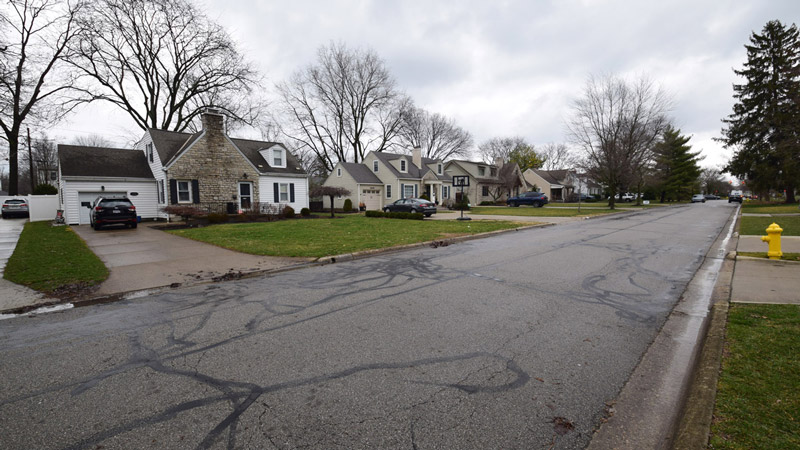
Drive through any Ohio suburb, and you’ll spot rows of Ranch and split-level houses lining the streets, their picture windows catching the afternoon light. These post-World War II (postwar) subdivisions sprouted up across the state, reshaping communities from Cleveland to Cincinnati and every town in between. Today, many of these houses are turning 50, 60, even 80 years old, and these milestones mean they are subject to federal historic preservation review during road construction and infrastructure expansion.
For the Ohio Department of Transportation (ODOT), this expansion created both an opportunity and a challenge: How do they evaluate thousands of similar-looking properties, consistently and efficiently, while keeping transportation projects on track?
Postwar Growth and Preservation Challenge
ODOT partnered with our Cultural Resources team which has experience in developing methodologies for evaluating postwar residences and subdivisions with prior projects such as NCHRP Report 723: A Model for Identifying and Evaluating the Historic Significance of Post-World War II Housing (2012) and a similar study Mead & Hunt prepared for the Utah DOT: Historical Development of Utah’s Wasatch Front, 1940-1980 (2023).
Defining the Need: Consistency, Scale, and Compliance
To address their research needs, ODOT retained Mead & Hunt and subconsultant Lawhon & Associates to conduct a two-year study on Ohio’s postwar residential resources.
The goal was clear yet complex. Our team needed to create a comprehensive historic context and a practical, step-by-step methodology that could guide the evaluation of postwar residential subdivisions and individual properties statewide. This work would ultimately help ODOT meet its compliance responsibilities under Section 106 of the National Historic Preservation Act , while also bringing clarity and consistency to a process that had become increasingly difficult to manage.
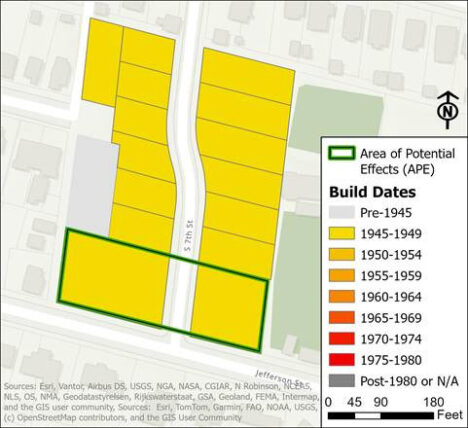
The need for this effort was rooted in both scale and nuance. Each year, more postwar homes reach the 50-year threshold for consideration under federal preservation laws. Many of these properties are located along transportation corridors, placing them directly in the path of ODOT improvement projects. Existing guidance—such as the 2010 Ohio Modern context—provided a valuable foundation, but it addressed a broader range of property types and stopped short of fully capturing residential development patterns through 1980. National-level guidance provided in NCHRP Report 723 included criteria for evaluation and a streamlined method for evaluating the hundreds of properties often encountered in a single subdivision. These tools provided a solid framework but ODOT still needed a tailored methodology that was academically sound, efficient, replicable, and practical for everyday use.
A Collaborative Research Approach
Our team of Cultural Resources experts led the effort through a highly collaborative and research-driven process. Working closely with a Technical Advisory Committee comprised of ODOT and Ohio State Historic Preservation Office (SHPO) staff, we began by identifying the specific challenges practitioners faced in the field. This early coordination helped ground the final product in real-world application.
Building on this foundation, the team conducted extensive research into Ohio’s residential development patterns. From there, we developed a comprehensive historic context that captured the interplay of national trends and local influences. As the project evolved, the team translated research into actionable guidance. We identified common architectural styles, forms, and character-defining features of postwar housing and categorized subdivision types by period and design characteristics.
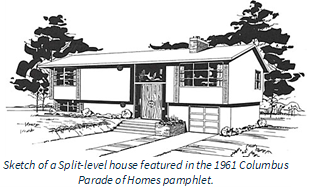
These insights were then organized into a clear and practical evaluation framework, providing guidance to consultants and reviewers to assess individual properties within their broader historical and developmental context. The result went beyond delivering a report; we developed an effective tool that supports comparative analysis, improves consistency, and streamlines decision-making. The insights from the SHPO staff were especially important in fine-tuning the tool to align with Ohio’s approach to evaluating historic properties for potential historic significance.
Delivering a Practical Framework with Lasting Impact
The final deliverables demonstrate the depth and value of this work. The historic context outlines how Ohio’s postwar residential landscape reflects economic growth, government policies, social change, and shifting cultural aspirations between 1940 and 1980. The step-by-step evaluation guide provides a rigorous yet practical method for identifying properties eligible for the National Register of Historic Places. Pilot evaluations further illustrate how the methodology performed in practice, confirming its ability to distinguish between eligible and ineligible resources with clarity and confidence.
Beyond these technical outcomes, the project tells a broader story about Ohio’s communities. Postwar neighborhoods are more than collections of houses; they are physical records of a transformative period in the state’s history. By developing a consistent and defensible approach to evaluating these resources, Mead & Hunt helped ODOT not only meet regulatory requirements but also contribute to a deeper understanding of Ohio’s built environment.
A Smoother Path Forward
As ODOT moves ahead with implementing and sharing this guidance with practitioners through training and outreach, the project’s benefits will continue to grow. The methodology ensures that evaluations are efficient and aligned with best practices, while supporting collaboration between ODOT, SHPO, and the broader preservation community.
For more information on this project, read the final report or watch a recording of the webinar “Evaluation Methods for Ohio’s Post World War II Residential Properties,” presented by Dianna Litvak, Principal Investigator.