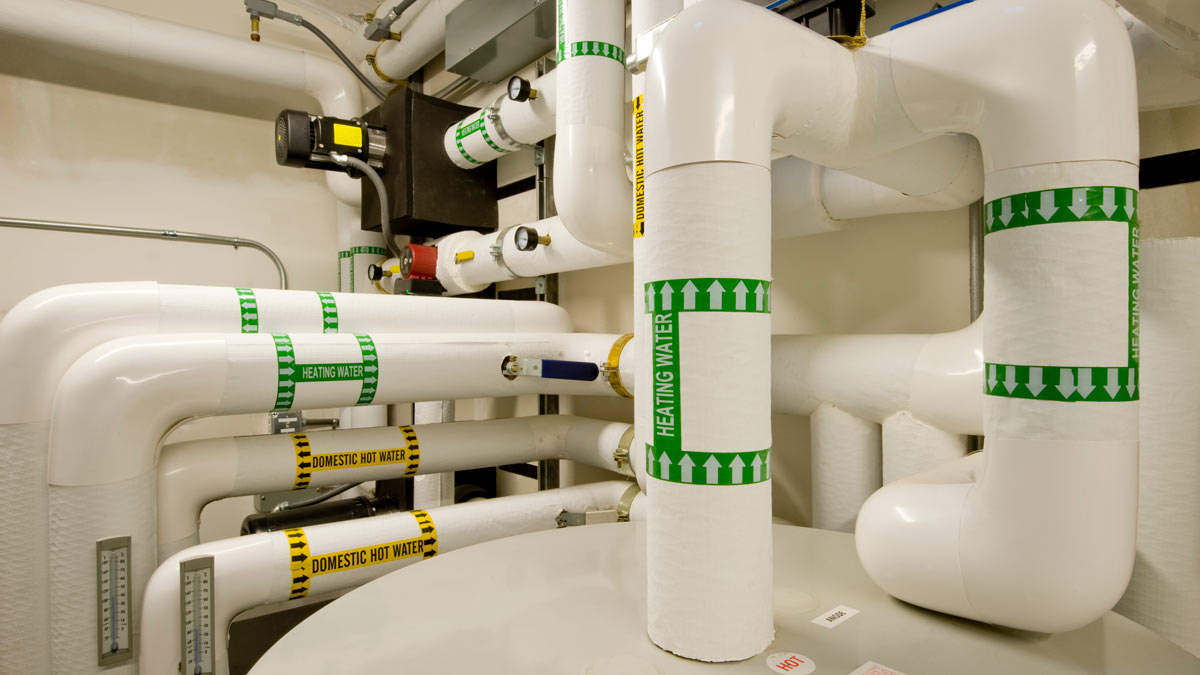
Many capital projects still evaluate refrigeration efficiency independently from plant heating demands. That traditional approach can improve individual pieces of equipment while overlooking a larger opportunity: using the heat already moving through the refrigeration system to offset energy purchased elsewhere in the facility.
The best opportunities emerge when refrigeration and heating are analyzed as a single energy network.
For plant leaders, this is more than a technical optimization. It is a capital-planning question with direct implications for utility costs, sustainability commitments, equipment renewal, and long-term competitiveness.
Looking at refrigeration and heating together can reveal energy-saving opportunities that separate system upgrades may miss.
How Refrigeration Heat Becomes a Heating Resource
A refrigeration system does not eliminate heat. It moves thermal energy from refrigerated spaces, products, and processes to another location, typically the atmosphere. The system rejects both the heat absorbed from the refrigerated load and the energy added by the compressors out of the system.
As a rule of thumb, about 12% of the rejected energy may be available as high-grade heat that can often be recovered directly from compressor discharge gas or oil-cooling systems and put straight to work as a heat source using heat exchangers. The remaining energy is generally available at a lower temperature and is considered low-grade.
A. Direct Recovery: Put Higher-Temperature Heat to Work
Direct recovery is often the simplest place to begin. A heat exchanger can transfer higher-temperature energy from compressor discharge gas or an oil-cooling circuit to water, glycol, or another heating medium. Potential applications include:
- Boiler makeup-water preheating
- Process or domestic hot-water preheating
- Utility heating loops
- Air-handling and space-heating systems
- Sanitation-water preheating
Recovered heat does not need to satisfy the entire heating load to create value. Preheating water before it reaches a boiler or water heater can still reduce energy and operating cost. When the recovered heat also reduces condenser duty, the project may provide additional plantwide utility benefits.
B. Heat Pumps: Upgrade Lower-Temperature Heat
Direct recovery captures only the higher-temperature portion of the opportunity. Lower-temperature heat contains substantial energy, but its temperature is often too close to ambient conditions for practical use. An industrial heat pump raises the refrigerant pressure so it can condense at a higher temperature, allowing heat that would otherwise be difficult to use to be effectively used as a heat source.
Fundamentally, a heat pump operates on the same vapor-compression principles as a refrigeration system. The difference is the objective: conventional refrigeration maintains a cold condition and rejects heat near ambient temperature, while a heat pump intentionally raises the condensing temperature to create a useful heating output. Industrial systems can generate heat outputs in the 140°F to 200°F range, depending on the equipment and application. Heat pumps are most relevant when substantial refrigeration demand occurs at the same time as a moderate-temperature process or utility heating load.
Build the Business Case Around Avoided Cost
Heat recovery becomes compelling when it is evaluated against the costs it can avoid over the life of the facility. Depending on the application, recovered heat can reduce boiler fuel or electrical heating demand, moderate condenser loading, and potentially reduce associated water and chemical use. It may also provide needed heating capacity without relying entirely on additional equipment.
That broader view can change capital priorities. A project that initially appears to be only a refrigeration upgrade may also support a boiler-capacity constraint, plant expansion, electrification strategy, or corporate emissions-reduction goal. When these benefits are considered together, heat recovery can compete for capital as a plantwide business improvement rather than an optional refrigeration feature.
The first step is not selecting a heat exchanger or heat pump. It is developing a facility-level picture of where heat is generated, where it is needed, and when both conditions occur. A useful evaluation compares refrigeration load with heating demand over time and identifies the temperature required by each potential user. Technology should follow the energy strategy, not define it.
Turn a Utility Upgrade into an Energy Strategy
Facilities do not need to recover every unit of available heat to create value. Direct preheating may provide a practical first step. Heat pumps can expand the opportunity when heating demand, temperature requirements, and operating schedules align. Refrigeration and heating decisions should no longer be made in isolation. Evaluating them as one energy network can reveal projects that lower operating costs, advance sustainability commitments, improve capital use, and position a facility to remain competitive as energy and emissions expectations evolve.
Before your next refrigeration or heating capital project moves forward, ask whether the facility has evaluated both sides of the thermal equation. The answer may reveal an opportunity that a traditional equipment-by-equipment review would miss.