“It’s going down. I’m yelling TIMBER!”
If you’re a millennial like me reading that phrase, there’s a good chance you just did a little seat wiggle, or at least a subtle shoulder move to the song now stuck in your head. I get it. I did the same thing. I’m a structural engineer, which makes that reaction feel slightly out of character for someone who spends most days quietly in front of a computer, trying to keep things calm, steady, and predictable.
A lot of my work is about making sure buildings stand strong for the long haul. My designs are carefully, intentionally created for maximum sustainability and resilience. And for most of my career, structural design has done its job in the background. It’s designed, coordinated, optimized, and then covered up so architecture can steal the show. Here, I’ll explore how mass timber flips that norm.
Structure Steps into the Spotlight
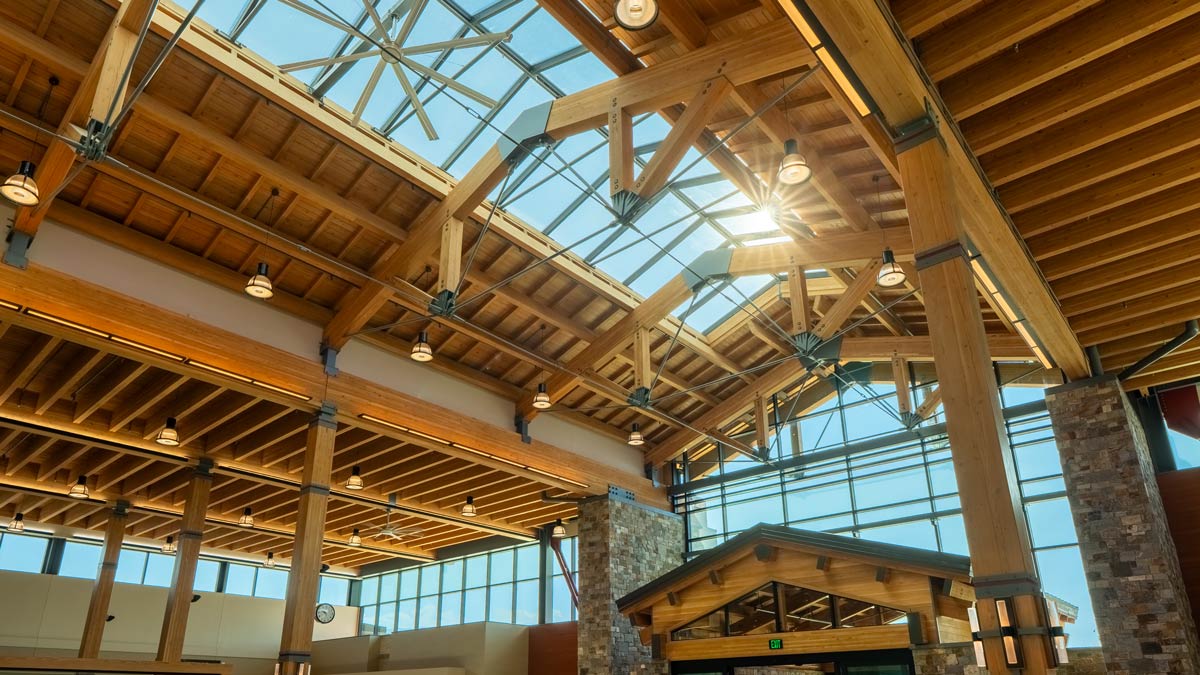
When a building’s structure is exposed, it stops being background noise and starts shaping the space itself. Columns, beams, and braced frames become part of the visual experience. Structure isn’t behind the architecture. It is the architecture.
I often joke that I like to play architect but only when it’s convenient. What I really mean is I care about how spaces feel, not just how they function. There’s a warmth to exposed wood that’s hard to replicate. The texture, the grain, and even the smell create spaces that feel grounded and welcoming rather than institutional.
Flawed by Design
Steel is precise, with clean lines and sharp edges. Seamless perfection is the goal. Mass timber is different. Wood isn’t perfectly straight or perfectly uniform, and that’s part of the appeal. The checking, variation, and subtle imperfections give wooden structures character.
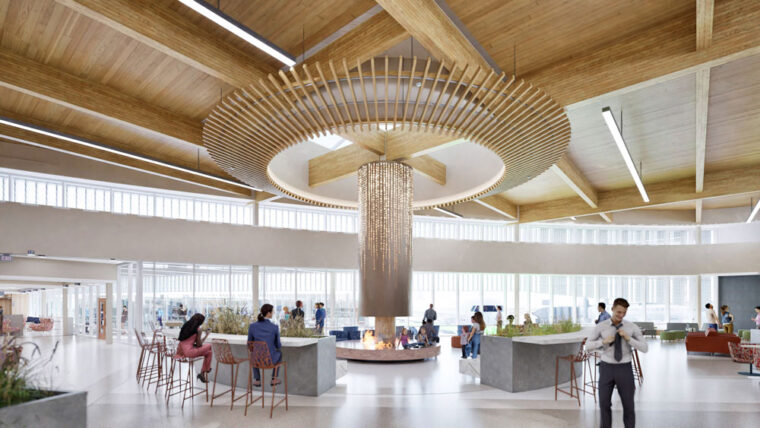
Timber also shows its age over time, developing a patina that lends character. In places like airports, where people are moving quickly, often stressed and distracted, warmth and authenticity matter more than we might realize. The timber feels calmer, grounded, more inviting.
In school, we learned how natural materials like wood can reduce stress and create a greater sense of comfort and well-being. When we see or touch natural materials like timber, our bodies relax in measurable ways. Some studies have even found people register lower blood pressure, slower heart rates, and reduced stress levels in spaces that make extensive use of wood. In practice, when a traveler rushes through a terminal wrapped in exposed timber, the effect can be subtle but real. Travelers may never consciously notice the exposed structure surrounding them, but they can experience how a space makes them feel. In many ways, that’s the point, especially with mass timber design.
Why Mass Timber Deserves to Shine
For much of modern building design, structure was expected to stay invisible. It quietly did its job before the walls went up and the ceilings dropped, allowing architecture to take center stage. In today’s designs, mass timber invites structure to be experienced, and that experience can be enjoyable and calming. The approach brings structure and architecture together while also supporting broader sustainability goals.
Much of what makes mass timber successful stems from the collaboration between owners, architects, and engineers early in the process. I elaborate on that in my next article in this series, Mass Timber Part II: An Ideal Blend of Form and Function, which explores the attributes of mass timber in the aviation sector. The third article in this series will feature architect Rachel Usher’s perspective on how material selection, biophilic design, and the vision of airport leadership help shape the experience people have within these spaces.