
Cultural resources work can feel like something you only notice after the fact, but for Erin Kelly, it’s about uncovering the stories that shape the places around us. As an architectural historian at Mead & Hunt, Erin works to document and protect historic places while also building relationships across the firm through her involvement in the LGBTQ+ employee resource group.
Pride Month Spotlight with Cultural Resource Specialist Erin Kelly
We sat down with Erin to talk about her path into the field, the work that keeps her curious, and how she’s found connection and balance along the way.
What drew you to cultural resources, and what keeps you excited about the field?
I’ve always been interested in history, but this field lets you apply it in a really tangible way. You’re out in communities learning about their history and connecting with people. The variety is a big part of what I love about my career. Every project is a little different, and every place has its own story to tell.
Is there a project that’s felt especially meaningful to you?
We recently worked on a project in Benton, Wisconsin, a small mining town in the southwestern part of the state.
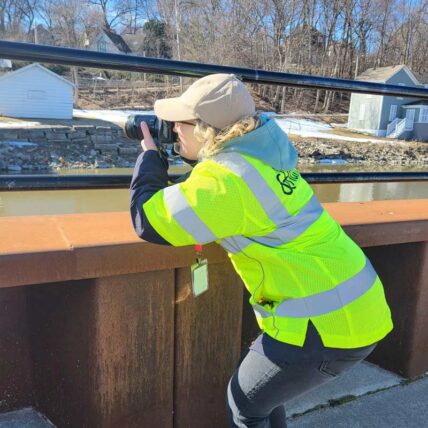 At first glance, it feels small, quiet and isolated. But when you start looking closer, you see how much history is packed into a single place. There’s one stretch of town with six churches, each representing different denominations.
One of them was built by an Italian priest who later became known as Father Matthew Kelly. He spoke broken English to an Irish Catholic community and went on to build dozens of schools across the region. Today, he’s being considered for sainthood, and he’s buried in this small town that most people don’t know exists.
“You can drive right through a town and miss it, but there’s so much history layered into a single place if you take the time to look.”
For someone unfamiliar with your field, what do you wish more people understood about the work you do?
I think a lot of people assume that if you go into history, your options are limited to teaching, museum work, or genealogy. But there are paths like this where you can still do meaningful, people-centered work, while also being part of a larger firm and having career stability.
You’ve been a longtime leader in the LGBTQ+ employee resource group. What motivated you to get involved?
I got involved pretty early on, around 2021. At the time, I was just starting my career and looking for ways to connect beyond my immediate team. The ERG was a great way to do that. I was able to meet people across different offices, disciplines, and projects, which helped me feel more connected to the company as a whole. It also made it easier to build relationships.
You recently welcomed a new baby—congratulations! How has that experience shifted your perspective on work and life?
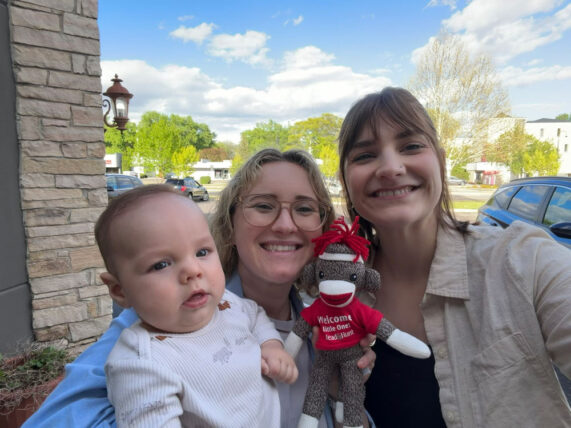
Thank you! I’ve always tried to achieve work-life balance, and that’s become even more important now that my wife and I are new parents. From the beginning, I was honest with management about what I needed. We created a plan with a staggered leave, adjusting my projects to fit that timeline. When I came back, I moved to a reduced schedule, which has made a big difference. It allows me to be fully focused when I’m working, while also having meaningful time at home.
What has stood out to you about how Mead & Hunt supports employees during big life moments like this?
They’re willing to listen and work with you. If you can explain what you need and how it can fit into your role, leadership is open to having that conversation and finding a solution. The flexibility has been great for my family. Thanks to that support, I’m overjoyed to go home after work and cradle my son in my arms. He’s the light of my life.