
Skip to content
Mead & Hunt logo
  • Markets
    • Aviation
    • Cultural Resources
    • Education
    • Federal
    • Food & Beverage
    • Justice
    • Renewable Energy
    • State & Local
    • Transportation
    • Water
  • Services
    • Architecture & Interiors
    • Commissioning
    • Construction Services
    • Engineering
    • Environmental
    • Fabrication & Custom Manufacturing
    • Planning
    • Sustainability & Resilience
    • Technology & Security
  • Portfolio
  • News
  • About
    • Purpose & Values
    • Meet Our Team
    • Inclusion & Belonging
    • Corporate Responsibility
    • Locations
    • Scholarship Opportunities
    • Our History
    • Mead & Hunt Foundation
  • Careers
  • Markets
    • Aviation
    • Cultural Resources
    • Education
    • Federal
    • Food & Beverage
    • Justice
    • Renewable Energy
    • State & Local
    • Transportation
    • Water
  • Services
    • Architecture & Interiors
    • Commissioning
    • Construction Services
    • Engineering
    • Environmental
    • Fabrication & Custom Manufacturing
    • Planning
    • Sustainability & Resilience
    • Technology & Security
  • Portfolio
  • News
  • About
    • Purpose & Values
    • Meet Our Team
    • Inclusion & Belonging
    • Corporate Responsibility
    • Locations
    • Scholarship Opportunities
    • Our History
    • Mead & Hunt Foundation
  • Careers
Mead & Hunt logo
  • Markets
    • Aviation
    • Cultural Resources
    • Education
    • Federal
    • Food & Beverage
    • Justice
    • Renewable Energy
    • State & Local
    • Transportation
    • Water
  • Services
    • Architecture & Interiors
    • Commissioning
    • Construction Services
    • Engineering
    • Environmental
    • Fabrication & Custom Manufacturing
    • Planning
    • Sustainability & Resilience
    • Technology & Security
  • Portfolio
  • News
  • About
    • Purpose & Values
    • Meet Our Team
    • Inclusion & Belonging
    • Corporate Responsibility
    • Locations
    • Scholarship Opportunities
    • Our History
    • Mead & Hunt Foundation
  • Careers
  • Markets
    • Aviation
    • Cultural Resources
    • Education
    • Federal
    • Food & Beverage
    • Justice
    • Renewable Energy
    • State & Local
    • Transportation
    • Water
  • Services
    • Architecture & Interiors
    • Commissioning
    • Construction Services
    • Engineering
    • Environmental
    • Fabrication & Custom Manufacturing
    • Planning
    • Sustainability & Resilience
    • Technology & Security
  • Portfolio
  • News
  • About
    • Purpose & Values
    • Meet Our Team
    • Inclusion & Belonging
    • Corporate Responsibility
    • Locations
    • Scholarship Opportunities
    • Our History
    • Mead & Hunt Foundation
  • Careers

Why Dams Fail

  • November 30, 2021
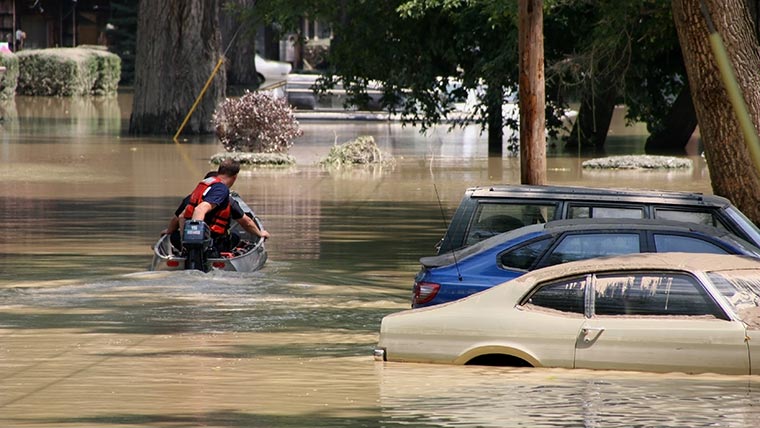
Dam failure flooding

Every year or two, there seems to be a storm event that leads to a dam failure. The dam often fails due to inadequate spillway capacity and the dam is overtopped. This was the case at Oroville, which we have written about before. The emergency spillway overtopped and scoured out the downstream rock. When a dam is overtopped, the earthen portion of the dam quickly erodes and drains the reservoir. There are many reasons dams fail, but they rarely fail because they aren’t structurally “strong” enough to hold back water.

Edenville Dam failure investigation

On May 19th, 2020, the Edenville Dam in Michigan failed after two days of heavy rain. An independent team of national dam experts reviewed the dam failure. They concluded the dam did not fail by overtopping, but rather because the earth embankment became overloaded. They determined the actual failure mechanism was static liquefaction of the embankment soils. Put simply, this was a geotechnical issue, not a structural issue with the dam.

Liquefaction explained

Liquefaction is generally tied to earthquake events. During an earthquake, the ground vibrations put saturated soil particles in motion, and they lose particle-to-particle contact. Without particle contact, soil loses strength and cannot support loads from building foundations or water forces on a dam. In the case of static liquefaction, the saturated soils are loaded to their peak strength while the soil consolidates (or strains). As the soil strains, it cannot sustain the strength under loading and collapses internally. This is usually happens with round fine sand particles.

While liquefaction is typically a result of earthquake events, this was not the case with the Edenville Dam. The investigative team reviewed a video that showed the reservoir rose to within about two feet of the dam’s crest, and then the downstream slope quickly failed, releasing water downstream. Post failure testing of the embankment soils confirmed that the sands were very susceptible to static liquefaction.

Looking ahead

The Edenville dam failure will likely raise concerns with other similarly constructed dams. The focus will be on dams constructed with fine sands and those with marginal spillway capacity that can’t pass large rainfall events, which can result in a dam becoming fully loaded. This event will change the way we evaluate these types of conditions in the future.

Dams are critical infrastructure that communities rely on to keep people safe. It is of utmost importance that they be reliable and functioning correctly. We as engineers can take these events as vital learning opportunities. By striving to understand failures and apply lessons learned, we can better provide safe, reliable infrastructure for the communities we serve.


Jim Botz headshot

Jim Botz, PE

As a Senior Geotechnical Engineer, Jim has decades of experience in all aspects of geotechnical engineering, including shallow and deep foundations, ground improvement, and slope stability and stabilization, among others. When not at work, you can find Jim hanging out at his cabin in the Wisconsin Northwoods and spending time with his six grandchildren. He has also been an off-ice official for the St. Norbert College hockey team since 1994.

Linkedin Envelope Readme
PrevPrevious
NextNext

Most Popular

New Report Explores Opportunities and Challenges of AI in Airport Security
June 24, 2026
Evaluating Ohio’s Postwar Neighborhoods: A New Framework for Preservation and Compliance
June 22, 2026
Outstanding Project Award Winner: Silver Springs State Park Boardwalks and Pedestrian Bridge
June 17, 2026
Introducing the Mead & Hunt Foundation
June 16, 2026

Main Menu

  • Home
  • Markets
  • Services
  • Portfolio
  • News
  • About
  • Careers
  • Home
  • Markets
  • Services
  • Portfolio
  • News
  • About
  • Careers

Useful Links

  • Ebids
  • Corporate Responsibility
  • Equipment & Parts
  • GSA Schedules Program
  • Government Contract Vehicles
  • Policy for Third-Party Recruiters
  • Transparency in Coverage
  • Ebids
  • Corporate Responsibility
  • Equipment & Parts
  • GSA Schedules Program
  • Government Contract Vehicles
  • Policy for Third-Party Recruiters
  • Transparency in Coverage

Get in touch

  • Apply Today
  • Contact Us
  • Locations
  • Title VI
  • Apply Today
  • Contact Us
  • Locations
  • Title VI

Connect with us

Linkedin Facebook Instagram Vimeo

© 2026 Mead & Hunt, Inc. All rights reserved.

Privacy Settings | Privacy & CCPA Policy | Do Not Sell | Site Map