
Skip to content
Mead & Hunt logo
  • Markets
    • Aviation
    • Cultural Resources
    • Education
    • Federal
    • Food & Beverage
    • Justice
    • Renewable Energy
    • State & Local
    • Transportation
    • Water
  • Services
    • Architecture & Interiors
    • Commissioning
    • Construction Services
    • Engineering
    • Environmental
    • Fabrication & Custom Manufacturing
    • Planning
    • Sustainability & Resilience
    • Technology & Security
  • Portfolio
  • News
  • About
    • Purpose & Values
    • Meet Our Team
    • Inclusion & Belonging
    • Corporate Responsibility
    • Locations
    • Scholarship Opportunities
    • Our History
    • Mead & Hunt Foundation
  • Careers
  • Markets
    • Aviation
    • Cultural Resources
    • Education
    • Federal
    • Food & Beverage
    • Justice
    • Renewable Energy
    • State & Local
    • Transportation
    • Water
  • Services
    • Architecture & Interiors
    • Commissioning
    • Construction Services
    • Engineering
    • Environmental
    • Fabrication & Custom Manufacturing
    • Planning
    • Sustainability & Resilience
    • Technology & Security
  • Portfolio
  • News
  • About
    • Purpose & Values
    • Meet Our Team
    • Inclusion & Belonging
    • Corporate Responsibility
    • Locations
    • Scholarship Opportunities
    • Our History
    • Mead & Hunt Foundation
  • Careers
Mead & Hunt logo
  • Markets
    • Aviation
    • Cultural Resources
    • Education
    • Federal
    • Food & Beverage
    • Justice
    • Renewable Energy
    • State & Local
    • Transportation
    • Water
  • Services
    • Architecture & Interiors
    • Commissioning
    • Construction Services
    • Engineering
    • Environmental
    • Fabrication & Custom Manufacturing
    • Planning
    • Sustainability & Resilience
    • Technology & Security
  • Portfolio
  • News
  • About
    • Purpose & Values
    • Meet Our Team
    • Inclusion & Belonging
    • Corporate Responsibility
    • Locations
    • Scholarship Opportunities
    • Our History
    • Mead & Hunt Foundation
  • Careers
  • Markets
    • Aviation
    • Cultural Resources
    • Education
    • Federal
    • Food & Beverage
    • Justice
    • Renewable Energy
    • State & Local
    • Transportation
    • Water
  • Services
    • Architecture & Interiors
    • Commissioning
    • Construction Services
    • Engineering
    • Environmental
    • Fabrication & Custom Manufacturing
    • Planning
    • Sustainability & Resilience
    • Technology & Security
  • Portfolio
  • News
  • About
    • Purpose & Values
    • Meet Our Team
    • Inclusion & Belonging
    • Corporate Responsibility
    • Locations
    • Scholarship Opportunities
    • Our History
    • Mead & Hunt Foundation
  • Careers

Reimagining Traffic Signal Timing in a Post-COVID World

  • November 5, 2020
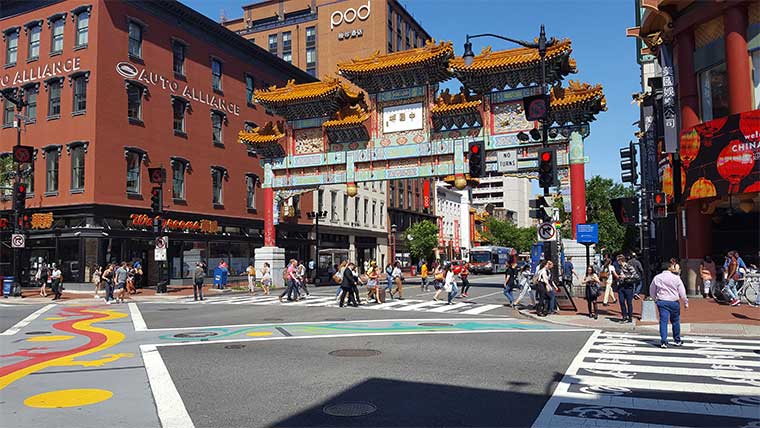
Downtown DC with signal timings

The COVID-19 pandemic has disrupted nearly every industry and changed the way people think about work. Mead & Hunt’s travel survey indicates a strong appetite for remote work, and the potential for significant shifts in travel patterns and modes. As we witness this transformational shift to a remote workforce, what will it mean for the way we engineer traffic signal timings? It is important for practitioners to start reimagining their traffic signal timing programs and how they can be adapted to meet the challenges of our uncertain future.

Signal Timing for an Uncertain Future.

The long-term impacts of COVID-19 on our transportation system are far from certain. Will traffic volumes return to normal soon or ever? What will happen if we change our signal timings now, and then the traffic volumes return suddenly? Expending limited resources to rapidly retime entire signal networks in response to lower traffic volumes is not feasible. Adaptive Signal Control could help, but takes time to deploy – and, as Keith Riniker explains, may not always be the right solution.

A Renewed Focus on Safety.

The COVID-19 pandemic adds a new dimension to transportation safety in terms of personal health and avoiding infection. Expanded sidewalks or bike lanes for social distancing means fewer travel lanes (or less parking), the threat of infection puts the safety of pedestrian pushbuttons in question, and the fear of crowding on public transit means more buses and bus lanes to reduce occupancy and improve service. The traveling public will expect traffic signals to play a role in supporting these changes. But rapidly replacing existing pushbuttons with touchless technology or deploying Transit Signal Priority are not short-term solutions.

Reimagining Existing Tools for New Challenges.

The new challenges faced by traffic signal timing practitioners are compounded by funding shortfalls facing many agencies. New technology and high dollar studies are not in the budget – we need to make it work with what we have. Here are some simple strategies that can be considered:

  • Prioritize pedestrians and avoid pushbuttons by instituting pedestrian recalls where appropriate.
  • Increase crossing times to allow pedestrians to spread out, particularly in areas with vulnerable populations (e.g. senior living facilities).
  • Install Leading Pedestrian Intervals (LPIs) to improve safety and encourage multi-modal transportation.
  • During your next corridor retiming project, develop special peak-direction (AM & PM) offset plans for lower volume conditions – leverage existing lower cycle and split plans (e.g. Midday) to save resources. Save them in your database for on-demand use like any other special event plans.
  • When possible, use existing lower cycle plans to account for lower traffic volumes.
  • Identify critical intersections and movements for transit vehicles. Consider pretimed queue jump phasing with concurrent LPIs to avoid costly transit detection equipment and maintenance.
  • Save money on traffic counts by using big data to identify travel pattern trends, and compare historical counts with field observations to understand what is happening in the field.

Mead & Hunt is proactively recommending and applying these techniques as part of our signal timing work for multiple jurisdictions. These actions help us meet our commitment to put people first.


headshot of robin fish

Robin Fish, PE, PTOE, RSP1

Robin is the Washington DC Office Manager and a Senior Project Manager in the Mid-Atlantic Traffic Engineering & ITS Department at Mead & Hunt. He leads a team of talented traffic engineers and analysts to bring safe and efficient transportation solutions to the District of Columbia and surrounding region. When not at work, Robin can be found watching Formula 1, chasing his own race car driver ambitions in a Sim Race, or walking his 100-pound Italian Mastiff.

Linkedin Envelope Readme
PrevPrevious
NextNext

Most Popular

New Report Explores Opportunities and Challenges of AI in Airport Security
June 24, 2026
Evaluating Ohio’s Postwar Neighborhoods: A New Framework for Preservation and Compliance
June 22, 2026
Outstanding Project Award Winner: Silver Springs State Park Boardwalks and Pedestrian Bridge
June 17, 2026
Introducing the Mead & Hunt Foundation
June 16, 2026

Main Menu

  • Home
  • Markets
  • Services
  • Portfolio
  • News
  • About
  • Careers
  • Home
  • Markets
  • Services
  • Portfolio
  • News
  • About
  • Careers

Useful Links

  • Ebids
  • Corporate Responsibility
  • Equipment & Parts
  • GSA Schedules Program
  • Government Contract Vehicles
  • Policy for Third-Party Recruiters
  • Transparency in Coverage
  • Ebids
  • Corporate Responsibility
  • Equipment & Parts
  • GSA Schedules Program
  • Government Contract Vehicles
  • Policy for Third-Party Recruiters
  • Transparency in Coverage

Get in touch

  • Apply Today
  • Contact Us
  • Locations
  • Title VI
  • Apply Today
  • Contact Us
  • Locations
  • Title VI

Connect with us

Linkedin Facebook Instagram Vimeo

© 2026 Mead & Hunt, Inc. All rights reserved.

Privacy Settings | Privacy & CCPA Policy | Do Not Sell | Site Map