
Skip to content
Mead & Hunt logo
  • Markets
    • Aviation
    • Cultural Resources
    • Education
    • Federal
    • Food & Beverage
    • Justice
    • Renewable Energy
    • State & Local
    • Transportation
    • Water
  • Services
    • Architecture & Interiors
    • Commissioning
    • Construction Services
    • Engineering
    • Environmental
    • Fabrication & Custom Manufacturing
    • Planning
    • Sustainability & Resilience
    • Technology & Security
  • Portfolio
  • News
  • About
    • Purpose & Values
    • Meet Our Team
    • Inclusion & Belonging
    • Corporate Responsibility
    • Locations
    • Scholarship Opportunities
    • Our History
    • Mead & Hunt Foundation
  • Careers
  • Markets
    • Aviation
    • Cultural Resources
    • Education
    • Federal
    • Food & Beverage
    • Justice
    • Renewable Energy
    • State & Local
    • Transportation
    • Water
  • Services
    • Architecture & Interiors
    • Commissioning
    • Construction Services
    • Engineering
    • Environmental
    • Fabrication & Custom Manufacturing
    • Planning
    • Sustainability & Resilience
    • Technology & Security
  • Portfolio
  • News
  • About
    • Purpose & Values
    • Meet Our Team
    • Inclusion & Belonging
    • Corporate Responsibility
    • Locations
    • Scholarship Opportunities
    • Our History
    • Mead & Hunt Foundation
  • Careers
Mead & Hunt logo
  • Markets
    • Aviation
    • Cultural Resources
    • Education
    • Federal
    • Food & Beverage
    • Justice
    • Renewable Energy
    • State & Local
    • Transportation
    • Water
  • Services
    • Architecture & Interiors
    • Commissioning
    • Construction Services
    • Engineering
    • Environmental
    • Fabrication & Custom Manufacturing
    • Planning
    • Sustainability & Resilience
    • Technology & Security
  • Portfolio
  • News
  • About
    • Purpose & Values
    • Meet Our Team
    • Inclusion & Belonging
    • Corporate Responsibility
    • Locations
    • Scholarship Opportunities
    • Our History
    • Mead & Hunt Foundation
  • Careers
  • Markets
    • Aviation
    • Cultural Resources
    • Education
    • Federal
    • Food & Beverage
    • Justice
    • Renewable Energy
    • State & Local
    • Transportation
    • Water
  • Services
    • Architecture & Interiors
    • Commissioning
    • Construction Services
    • Engineering
    • Environmental
    • Fabrication & Custom Manufacturing
    • Planning
    • Sustainability & Resilience
    • Technology & Security
  • Portfolio
  • News
  • About
    • Purpose & Values
    • Meet Our Team
    • Inclusion & Belonging
    • Corporate Responsibility
    • Locations
    • Scholarship Opportunities
    • Our History
    • Mead & Hunt Foundation
  • Careers

Advancements in Microplastics Removal from Water

  • February 1, 2022
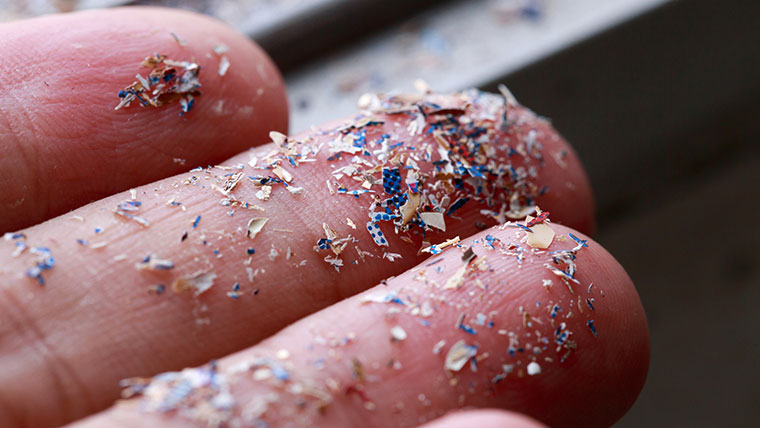
microplastics on fingers

Plastic is an invention that transformed human life, bringing us world-wide convenience. It is also everlasting. We all have a growing awareness about how single use plastic impacts the environment and wildlife. Our awareness is broadening to understand how these may impact humans as well. Single use plastic containers break down into smaller and smaller particles, which end up as tiny (less than 5 mm in length) microplastics in our water systems. Microplastics may also start tiny to begin with in the form of microfibers in our clothing. These get released into the environment and back into our drinking water supply.

How prevalent are microplastics in our drinking water? One study indicates 93% of bottled water contained microplastics. Tap water is found to contain nearly as much in some samples.

Microplastics are present in many different shapes and sizes, with varied chemical properties. This makes them extra difficult to remove from water through filtration. Some success can be seen using activated carbon filters or reverse osmosis. Although filtration or collection may be possible to reduce the concentration of microplastics entering the drinking water supply, the effectiveness is limited, and you still have a waste byproduct to address.

Challenges bring new innovations

We know that source control is the most effective way to reduce the presence of plastics in our environment, and we can all strive to reduce our use of plastic. But what about the plastics that already exist in our environment in an every growing micro scale? There are some advancements in treatments to reduce and eliminate microplastics in our water systems, as well as policies being developed to protect our drinking water.

  • Success has been found in using ferrofluids to attract and collect microplastics suspended in water, as studied by this young student: This Irish Teen Won the Google Science Fair Award for Removing Microplastics From Water (globalcitizen.org)
  • Scientists turn to bacteria, common in wastewater treatment processes, to remove microplastics in water: Scientists find way to remove polluting microplastics with bacteria | Microbiology | The Guardian.
  • Studies have found these particles can be destroyed via electrolytic oxidation: Scientists find new way to eliminate microplastics from water (openaccessgovernment.org).
  • In 2020, California established a definition of microplastics for drinking water testing (Microplastics Drinking Water | California State Water Resources Control Board). By establishing a definition of microplastics, the state can standardize methods for monitoring and studying microplastics in drinking water. In 2021, the state drafted proposed standardized methods for testing and a testing and reporting plan for microplastics in drinking water. The public comment period closed the end of the year, and the state looks to adopt a standard by March 2022.

This past year has brought a lot of new challenges—and, in many ways, these challenges have fostered innovation. This is certainly true regarding addressing the hidden problem of microplastics in water. We have seen numerous recent advancements in this area, and I look forward to supporting these advancements in science both professionally and personally.

PrevPrevious
NextNext

Most Popular

Employee Perspective: Growing with the Florida Water Team
July 22, 2026
Unlocking Onsite Energy: Key Considerations for Distributed Generation
July 17, 2026
6 Ways Airports Can Make Travel Easier for People with Disabilities
July 16, 2026
Mead & Hunt Names Kristin Moore as CFO
July 10, 2026

Main Menu

  • Home
  • Markets
  • Services
  • Portfolio
  • News
  • About
  • Careers
  • Home
  • Markets
  • Services
  • Portfolio
  • News
  • About
  • Careers

Useful Links

  • Ebids
  • Corporate Responsibility
  • Equipment & Parts
  • GSA Schedules Program
  • Government Contract Vehicles
  • Policy for Third-Party Recruiters
  • Transparency in Coverage
  • Ebids
  • Corporate Responsibility
  • Equipment & Parts
  • GSA Schedules Program
  • Government Contract Vehicles
  • Policy for Third-Party Recruiters
  • Transparency in Coverage

Get in touch

  • Apply Today
  • Contact Us
  • Locations
  • Title VI
  • Apply Today
  • Contact Us
  • Locations
  • Title VI

Connect with us

Linkedin Facebook Instagram Vimeo

© 2026 Mead & Hunt, Inc. All rights reserved.

Privacy Settings | Privacy & CCPA Policy | Do Not Sell | Site Map