
Skip to content
Mead & Hunt logo
  • Markets
    • Aviation
    • Cultural Resources
    • Education
    • Federal
    • Food & Beverage
    • Justice
    • Renewable Energy
    • State & Local
    • Transportation
    • Water
  • Services
    • Architecture & Interiors
    • Commissioning
    • Construction Services
    • Engineering
    • Environmental
    • Fabrication & Custom Manufacturing
    • Planning
    • Sustainability & Resilience
    • Technology & Security
  • Portfolio
  • News
  • About
    • Purpose & Values
    • Meet Our Team
    • Inclusion & Belonging
    • Corporate Responsibility
    • Locations
    • Scholarship Opportunities
    • Our History
    • Mead & Hunt Foundation
  • Careers
  • Markets
    • Aviation
    • Cultural Resources
    • Education
    • Federal
    • Food & Beverage
    • Justice
    • Renewable Energy
    • State & Local
    • Transportation
    • Water
  • Services
    • Architecture & Interiors
    • Commissioning
    • Construction Services
    • Engineering
    • Environmental
    • Fabrication & Custom Manufacturing
    • Planning
    • Sustainability & Resilience
    • Technology & Security
  • Portfolio
  • News
  • About
    • Purpose & Values
    • Meet Our Team
    • Inclusion & Belonging
    • Corporate Responsibility
    • Locations
    • Scholarship Opportunities
    • Our History
    • Mead & Hunt Foundation
  • Careers
Mead & Hunt logo
  • Markets
    • Aviation
    • Cultural Resources
    • Education
    • Federal
    • Food & Beverage
    • Justice
    • Renewable Energy
    • State & Local
    • Transportation
    • Water
  • Services
    • Architecture & Interiors
    • Commissioning
    • Construction Services
    • Engineering
    • Environmental
    • Fabrication & Custom Manufacturing
    • Planning
    • Sustainability & Resilience
    • Technology & Security
  • Portfolio
  • News
  • About
    • Purpose & Values
    • Meet Our Team
    • Inclusion & Belonging
    • Corporate Responsibility
    • Locations
    • Scholarship Opportunities
    • Our History
    • Mead & Hunt Foundation
  • Careers
  • Markets
    • Aviation
    • Cultural Resources
    • Education
    • Federal
    • Food & Beverage
    • Justice
    • Renewable Energy
    • State & Local
    • Transportation
    • Water
  • Services
    • Architecture & Interiors
    • Commissioning
    • Construction Services
    • Engineering
    • Environmental
    • Fabrication & Custom Manufacturing
    • Planning
    • Sustainability & Resilience
    • Technology & Security
  • Portfolio
  • News
  • About
    • Purpose & Values
    • Meet Our Team
    • Inclusion & Belonging
    • Corporate Responsibility
    • Locations
    • Scholarship Opportunities
    • Our History
    • Mead & Hunt Foundation
  • Careers

3 Considerations for Successful Adaptive Signal Control Use

  • August 31, 2020
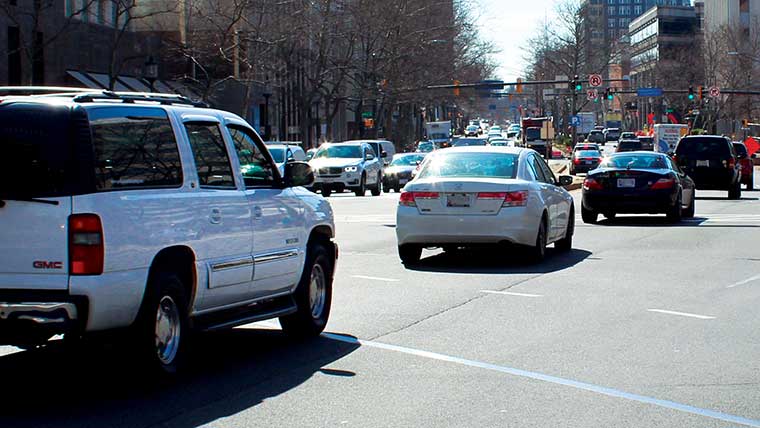
adaptive signal control helps traffic flow

Adaptive Signal Control (ASC) can be an effective tool to improve operations and traffic signal timings. ASC allows a signal system to respond in minutes or even seconds to traffic volume and capacity changes. This is accomplished by automating data collection and analysis and implementing system-wide changes. However, ASC programs are far from simple. How can we decide when, where, and how to implement ASC successfully? Here are three things to consider.

Selecting the right corridor.

ASC is not an effective solution for every corridor. ASC does not create capacity; rather, it optimizes green times using a variety of mechanisms. It’s therefore most successful in systems near capacity with available green time to reallocate, as well as high traffic volumes to warrant the investment. Corridors with high variability and unpredictable traffic demand volumes, or large fluctuations in demand are also ideal candidates. ASC may not be effective on well-timed, congested, and oversaturated corridors, corridors with insufficient or unreliable detection, or on corridors with heavy pedestrian volumes.

Selecting the right ASC technology.

There are different types of ASC technologies, which have differing capabilities. Which one to pick depends on the goals of the specific corridor it will be enhancing and how it fits into your current systems. To implement ASC technology, we’d need to look at the interoperability between programs, as well as compatibility with existing field equipment.

Consider the cost.

Keep in mind, ASC requires additional traffic engineering and signal maintenance capabilities, experience, and time, all of which can vary with system complexity. The resources needed for installation and upkeep should also be considered. While an adaptive control system should reduce time spent on periodic optimization of signal timing plans and improve operations during those times of variable traffic volume, these systems are not “set it and forget it.” A champion should be chosen to look after the installation, operation, and management of the adaptive system. Otherwise, many adaptive signal control systems have been neglected and ultimately turned off because the system was not performing as desired. Besides the internal agency costs, budget for annual vendor maintenance costs for warranty, system updates, and periodic troubleshooting support.

Overall, ASC can be an effective tool to reduce congestion and improve traffic flow in certain corridors. By choosing the right corridors and the right ASC programs, we as transportation professionals can successfully implement this technology to better our cities.


Keith Riniker headshot

Keith Riniker, PE, PTOE

Keith is a leading Intelligent Transportation Systems (ITS) and traffic engineer serving the mid-Atlantic region. He strives to provide traffic solutions that enhance the quality of life of the communities he serves. Outside of the world of transportation, Keith enjoys playing basketball, reading, and spending time with his wife and three sons.

Linkedin Envelope Readme
PrevPrevious
NextNext

Most Popular

New Report Explores Opportunities and Challenges of AI in Airport Security
June 24, 2026
Evaluating Ohio’s Postwar Neighborhoods: A New Framework for Preservation and Compliance
June 22, 2026
Outstanding Project Award Winner: Silver Springs State Park Boardwalks and Pedestrian Bridge
June 17, 2026
Introducing the Mead & Hunt Foundation
June 16, 2026

Main Menu

  • Home
  • Markets
  • Services
  • Portfolio
  • News
  • About
  • Careers
  • Home
  • Markets
  • Services
  • Portfolio
  • News
  • About
  • Careers

Useful Links

  • Ebids
  • Corporate Responsibility
  • Equipment & Parts
  • GSA Schedules Program
  • Government Contract Vehicles
  • Policy for Third-Party Recruiters
  • Transparency in Coverage
  • Ebids
  • Corporate Responsibility
  • Equipment & Parts
  • GSA Schedules Program
  • Government Contract Vehicles
  • Policy for Third-Party Recruiters
  • Transparency in Coverage

Get in touch

  • Apply Today
  • Contact Us
  • Locations
  • Title VI
  • Apply Today
  • Contact Us
  • Locations
  • Title VI

Connect with us

Linkedin Facebook Instagram Vimeo

© 2026 Mead & Hunt, Inc. All rights reserved.

Privacy Settings | Privacy & CCPA Policy | Do Not Sell | Site Map