
Skip to content
Mead & Hunt logo
  • Markets
    • Aviation
    • Cultural Resources
    • Education
    • Federal
    • Food & Beverage
    • Justice
    • Renewable Energy
    • State & Local
    • Transportation
    • Water
  • Services
    • Architecture & Interiors
    • Commissioning
    • Construction Services
    • Engineering
    • Environmental
    • Fabrication & Custom Manufacturing
    • Planning
    • Sustainability & Resilience
    • Technology & Security
  • Portfolio
  • News
  • About
    • Purpose & Values
    • Meet Our Team
    • Inclusion & Belonging
    • Corporate Responsibility
    • Locations
    • Scholarship Opportunities
    • Our History
    • Mead & Hunt Foundation
  • Careers
  • Markets
    • Aviation
    • Cultural Resources
    • Education
    • Federal
    • Food & Beverage
    • Justice
    • Renewable Energy
    • State & Local
    • Transportation
    • Water
  • Services
    • Architecture & Interiors
    • Commissioning
    • Construction Services
    • Engineering
    • Environmental
    • Fabrication & Custom Manufacturing
    • Planning
    • Sustainability & Resilience
    • Technology & Security
  • Portfolio
  • News
  • About
    • Purpose & Values
    • Meet Our Team
    • Inclusion & Belonging
    • Corporate Responsibility
    • Locations
    • Scholarship Opportunities
    • Our History
    • Mead & Hunt Foundation
  • Careers
Mead & Hunt logo
  • Markets
    • Aviation
    • Cultural Resources
    • Education
    • Federal
    • Food & Beverage
    • Justice
    • Renewable Energy
    • State & Local
    • Transportation
    • Water
  • Services
    • Architecture & Interiors
    • Commissioning
    • Construction Services
    • Engineering
    • Environmental
    • Fabrication & Custom Manufacturing
    • Planning
    • Sustainability & Resilience
    • Technology & Security
  • Portfolio
  • News
  • About
    • Purpose & Values
    • Meet Our Team
    • Inclusion & Belonging
    • Corporate Responsibility
    • Locations
    • Scholarship Opportunities
    • Our History
    • Mead & Hunt Foundation
  • Careers
  • Markets
    • Aviation
    • Cultural Resources
    • Education
    • Federal
    • Food & Beverage
    • Justice
    • Renewable Energy
    • State & Local
    • Transportation
    • Water
  • Services
    • Architecture & Interiors
    • Commissioning
    • Construction Services
    • Engineering
    • Environmental
    • Fabrication & Custom Manufacturing
    • Planning
    • Sustainability & Resilience
    • Technology & Security
  • Portfolio
  • News
  • About
    • Purpose & Values
    • Meet Our Team
    • Inclusion & Belonging
    • Corporate Responsibility
    • Locations
    • Scholarship Opportunities
    • Our History
    • Mead & Hunt Foundation
  • Careers

The Importance of Solid Foundations

  • June 16, 2020
solid foundations start with soil testing

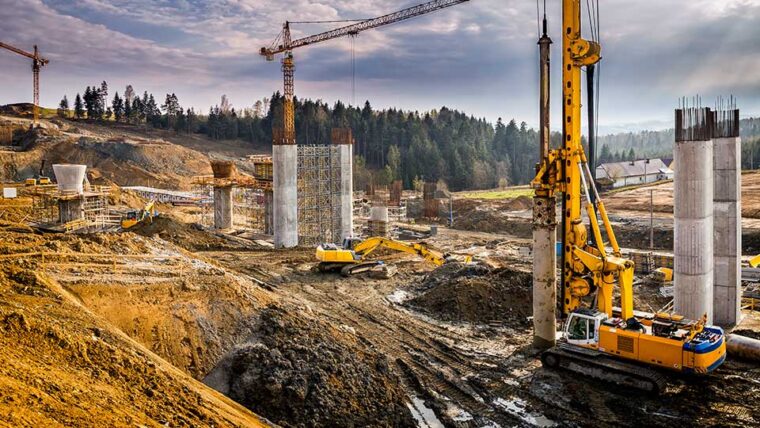
In our modern world, we typically take for granted that buildings and other structures were constructed on stable foundations. But many of our cities and towns were established in places where the soil may be soft and unsuitable for supporting structures and heavy loads. Lessons have been learned the hard way when structures of the past sank on these soft soils.

Urban centers like Boston, Seattle, and New Orleans have all experienced drastic settlements, and had to rebuild or underpin buildings. Why? They were all built in areas where various layers of sand, silt, clay, and organic materials have been deposited over millennia. Tidal pools, river valleys, lakes, bayous, bogs, and marshes can all play a role in this.

For various reasons, buildings and other infrastructure often need to be sited in these places. For instance, wastewater treatment facilities and pumping stations are often located in low-lying areas, riverbanks, and coastal areas where the soil and groundwater conditions can be problematic. Port facilities are another example; they are typically constructed in the water, and along the shoreline where the soils tend to be wet and unstable. The underlying soil deposits in these areas can vary widely depending on the geologic history of the site.

How can we avoid the mistakes of the past?

Engineers must have a clear understanding of the underlying soil profile to properly design and construct foundations in these areas. A thorough soil investigation should always be performed at these sites. The need to understand the soil profile and groundwater conditions cannot be overemphasized. A good soil investigation should include multiple borings advanced to adequate depth to understand the underlying soil profile, and if feasible, the depth to bedrock. Soil samples should be collected at regular intervals during drilling, and should be classified, recorded, preserved, and taken to a lab for further analysis. Groundwater conditions should be observed and recorded. A licensed geotechnical engineer should prepare a well-written report of the site’s soil conditions and underlying geology.

The foundation engineer must read and understand the geotechnical report prior to selection and design of the foundation system. The engineer must carefully weigh all factors that could possibly influence the foundation design. Some of these factors may include type and magnitude of loading, cost, constructability, potential settlement or sliding, earthquake, flooding, depth to bedrock, corrosion, etc. The foundation engineer should then bring forward the two or three foundation alternatives and perform a cost comparison.

Foundation contractors are a good resource for information and assistance with cost estimating. But the engineer should request input from at least three different contractors, because each will have a different opinion based on their resources and experience. It’s up to the foundation engineer to decide which system is most practical and cost effective for the project.

Foundation engineering is not an exact science; rather, it is a carefully considered strategy. Project stakeholders should be educated on the importance of a thorough geotechnical investigation and continued collaboration with the geotechnical engineer throughout the project. The foundation designer must have a good understanding of the geotechnical report and must consider potential alternatives. Specialty foundation contractors should be consulted for constructability and cost. By following these guidelines, the project stakeholders can provide a solid foundation that avoids the mistakes of the past.


Bill Black headshot

Bill Black, PE

Bill is a Senior Project Engineer in Mead & Hunt’s Water Group. His focus is on the design of heavy civil and marine structures, but he also has extensive experience with the design and construction of buildings and industrial structures. Bill is a licensed Professional Engineer in 22 states and is involved with standards committees of ASCE and USSD. Outside of work, Bill and his family live in Verona, Wisconsin, where they enjoy outdoor activities like cycling, skiing, sailing, and hiking.

Linkedin Envelope Readme
PrevPrevious
NextNext

Most Popular

America’s 250th: A Tavern, a Revolution, and 100,000 Artifacts
July 1, 2026
New Report Explores Opportunities and Challenges of AI in Airport Security
June 24, 2026
Evaluating Ohio’s Postwar Neighborhoods: A New Framework for Preservation and Compliance
June 22, 2026
Outstanding Project Award Winner: Silver Springs State Park Boardwalks and Pedestrian Bridge
June 17, 2026

Main Menu

  • Home
  • Markets
  • Services
  • Portfolio
  • News
  • About
  • Careers
  • Home
  • Markets
  • Services
  • Portfolio
  • News
  • About
  • Careers

Useful Links

  • Ebids
  • Corporate Responsibility
  • Equipment & Parts
  • GSA Schedules Program
  • Government Contract Vehicles
  • Policy for Third-Party Recruiters
  • Transparency in Coverage
  • Ebids
  • Corporate Responsibility
  • Equipment & Parts
  • GSA Schedules Program
  • Government Contract Vehicles
  • Policy for Third-Party Recruiters
  • Transparency in Coverage

Get in touch

  • Apply Today
  • Contact Us
  • Locations
  • Title VI
  • Apply Today
  • Contact Us
  • Locations
  • Title VI

Connect with us

Linkedin Facebook Instagram Vimeo

© 2026 Mead & Hunt, Inc. All rights reserved.

Privacy Settings | Privacy & CCPA Policy | Do Not Sell | Site Map