In the first two installments of this Safe Routes to School (SRTS) blog series, I introduced the Six Es framework and explored how Evaluation, Engineering, and Enforcement form the infrastructure foundation for safer school zones. Evaluation helps communities understand current conditions by assessing safety challenges and opportunities. Engineering translates those findings into physical improvements that make walking and biking routes safer and more accessible. Enforcement reinforces these efforts by encouraging responsible behavior and ensuring that safety rules are followed. But infrastructure alone doesn’t create lasting change. A well-designed crosswalk won’t help if families don’t know it exists, and a new bike rack sits empty if students haven’t learned to ride safely.
In this final blog, I’ll explore the three pillars that bring SRTS programs to life: Education, Encouragement, and Equity. These community-centered strategies empower students and families with knowledge, inspire behavioral change, and provide every child—regardless of their neighborhood—with access to safe routes to school.
Same Destination, Different Journey
In Part 2, we saw what a typical school zone looks like without SRTS: triple-parked cars, overwhelmed crossing guards, students weaving through traffic, and overflowing bike racks. Now picture a different 7:45 a.m. at that same elementary school.
A group of third graders walks together along the sidewalk, led by parent volunteers in bright orange vests. They wave to neighbors along the route, chatting about their favorite books and weekend plans.
Near the entrance, Maya coasts into the bike parking area with her friend. They lock up their bikes side by side in the spacious new rack, where every student finds a spot. Maya’s helmet displays a Bike Hero Awards sticker, earned for logging the most bike trips in her class.
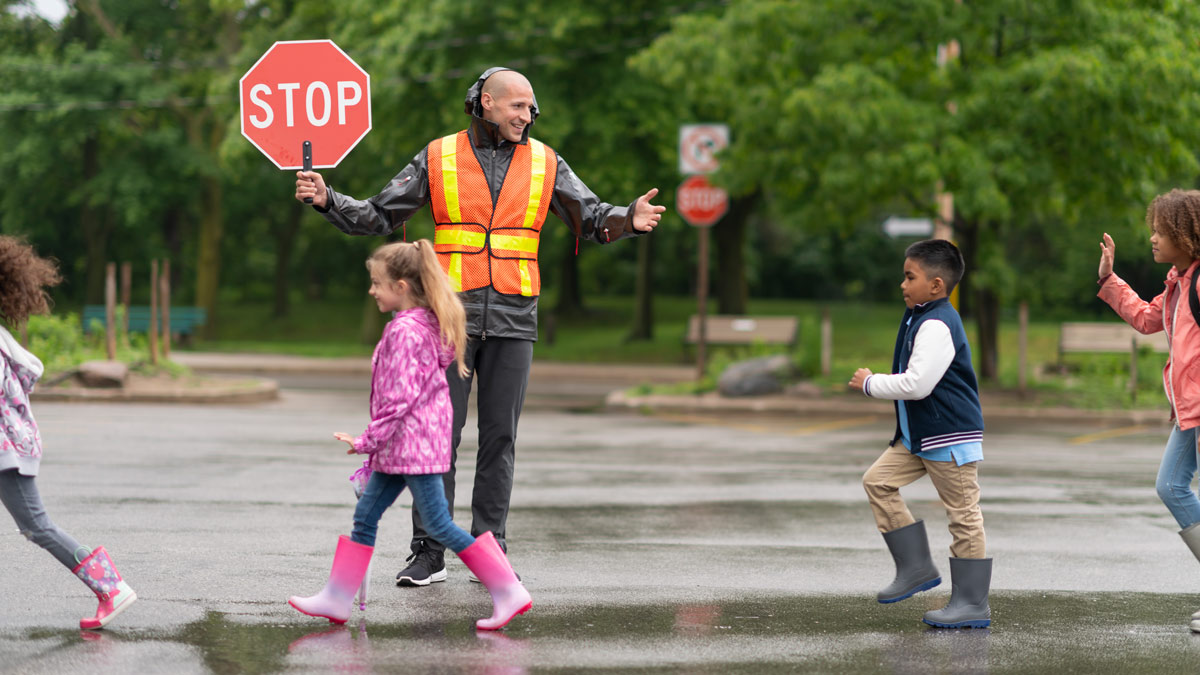
Meanwhile, a crossing guard greets families by name, while parents who once triple-parked now use the designated Park & Walk lot a block away.
These changes don’t happen overnight or through engineering and planning alone. Change is most successful when the school community comes together through education, encouragement, and a commitment to equity.
Education: Building Knowledge
When engaging with a school community, it’s important to start with education. Teach students and families about safe walking and biking practices, as well as the broader goals of the SRTS program. Knowledge is the foundation that makes all other efforts possible.
Classroom activities, posters, and interactive games are effective tools for reaching students where they already spend their time. A traffic safety coloring book for kindergartners, an interactive crosswalk simulation for third graders, or a route-mapping exercise for middle schoolers—each approach meets students at their developmental level while reinforcing critical safety messages. When a student learns to look both ways, practice standard hand signals for cyclists, or identify a safe crossing location, they carry those skills into adulthood.
Education also extends to parents and school staff. When administrators understand the program’s goals and see the data behind implemented recommendations, they become invested partners rather than passive recipients. When parents learn how drop-off procedures protect their children, compliance becomes cooperation. Educating the entire school community encourages shared ownership of the SRTS program outcomes.
Encouragement: Making Active Travel Irresistible
Knowledge alone doesn’t change behavior—motivation does. Encouragement makes active travel fun, social, and rewarding. It’s the difference between knowing you should walk to school and actually wanting to.
To build and sustain meaningful community engagement, consider strategies that integrate SRTS into school life and family routes:
- Build encouragement activities into existing structures.
- Partner with parent-teacher organizations to add a five-minute SRTS program updates to their regular meeting agenda.
- Work with physical education teachers to incorporate bike safety skills into their curriculum.
- Meet families where they already gather instead of asking them to attend one more event.
Themed events create excitement and build momentum. Programs like Bike Hero Awards recognize students who consistently choose active transportation, creating positive peer influence. Park & Walk programs designate nearby parking areas and organize group walks, reducing congestion while adding a social element to the commute. International Walk to School Day connects your school with thousands of others worldwide, generating media attention and community pride. Walking School Buses organize supervised walking groups along established routes, combining safety with social connection.
These events create a sense of community around active travel, so walking or biking to school becomes a shared neighborhood experience.
Equity: Safe Routes for Every Child
As we promote SRTS programs, we must ensure their benefits reach all students, regardless of background, neighborhood, or circumstances. Many states have developed school selection processes that prioritize equity alongside safety metrics. These processes often consider crash patterns, proximity to High Injury Networks (HIN), vulnerable road user trip generators, and historical underinvestment in transportation infrastructure. By directing resources toward communities that have been overlooked, SRTS programs can help bridge longstanding gaps in access and opportunity.
But equity also means designing solutions that work for diverse families. This includes the single parent working multiple jobs who can’t volunteer for a Walking School Bus, the family without internet access who might miss online safety resources, or students with disabilities who need accessible infrastructure at every step of their route.
Engaging school staff, parents, and community members in every phase invites solutions tailored to local needs.
Building a Movement Together
Throughout this series, I’ve explored how the Six Es work together: Evaluation identifies needs, Engineering builds solutions, Enforcement maintains standards, Education empowers families, Encouragement inspires action, and Equity extends these benefits to every child.
The SRTS program is a movement toward safer, healthier communities. When we improve school zone safety, we’re teaching children that their neighborhoods were designed with them in mind. We’re encouraging physical activity that builds lifelong health habits. At the same time, we’re reducing congestion and emissions while strengthening connections between schools and their communities.
None of this happens without collaboration. As transportation professionals, school administrators, parents, and community advocates, we each have a role to play.
I hope this series has equipped you to advance SRTS in your own community. Whether you’re launching a new program or advocating for a single safer crosswalk, every effort counts. Together, we can build a future where SRTS means every child in every neighborhood arrives at their classroom safely.