

Skip to content
Mead & Hunt logo
  • Markets
    • Aviation
    • Cultural Resources
    • Education
    • Federal
    • Food & Beverage
    • Justice
    • Renewable Energy
    • State & Local
    • Transportation
    • Water
  • Services
    • Architecture & Interiors
    • Commissioning
    • Construction Services
    • Engineering
    • Environmental
    • Fabrication & Custom Manufacturing
    • Planning
    • Sustainability & Resilience
    • Technology & Security
  • Portfolio
  • News
  • About
    • Purpose & Values
    • Meet Our Team
    • Inclusion & Belonging
    • Corporate Responsibility
    • Locations
    • Scholarship Opportunities
    • Our History
    • Mead & Hunt Foundation
  • Careers
  • Markets
    • Aviation
    • Cultural Resources
    • Education
    • Federal
    • Food & Beverage
    • Justice
    • Renewable Energy
    • State & Local
    • Transportation
    • Water
  • Services
    • Architecture & Interiors
    • Commissioning
    • Construction Services
    • Engineering
    • Environmental
    • Fabrication & Custom Manufacturing
    • Planning
    • Sustainability & Resilience
    • Technology & Security
  • Portfolio
  • News
  • About
    • Purpose & Values
    • Meet Our Team
    • Inclusion & Belonging
    • Corporate Responsibility
    • Locations
    • Scholarship Opportunities
    • Our History
    • Mead & Hunt Foundation
  • Careers
Mead & Hunt logo
  • Markets
    • Aviation
    • Cultural Resources
    • Education
    • Federal
    • Food & Beverage
    • Justice
    • Renewable Energy
    • State & Local
    • Transportation
    • Water
  • Services
    • Architecture & Interiors
    • Commissioning
    • Construction Services
    • Engineering
    • Environmental
    • Fabrication & Custom Manufacturing
    • Planning
    • Sustainability & Resilience
    • Technology & Security
  • Portfolio
  • News
  • About
    • Purpose & Values
    • Meet Our Team
    • Inclusion & Belonging
    • Corporate Responsibility
    • Locations
    • Scholarship Opportunities
    • Our History
    • Mead & Hunt Foundation
  • Careers
  • Markets
    • Aviation
    • Cultural Resources
    • Education
    • Federal
    • Food & Beverage
    • Justice
    • Renewable Energy
    • State & Local
    • Transportation
    • Water
  • Services
    • Architecture & Interiors
    • Commissioning
    • Construction Services
    • Engineering
    • Environmental
    • Fabrication & Custom Manufacturing
    • Planning
    • Sustainability & Resilience
    • Technology & Security
  • Portfolio
  • News
  • About
    • Purpose & Values
    • Meet Our Team
    • Inclusion & Belonging
    • Corporate Responsibility
    • Locations
    • Scholarship Opportunities
    • Our History
    • Mead & Hunt Foundation
  • Careers

GIS Streamlines Historic Road Evaluations

  • July 11, 2022
curved road with green tree and blue sky

Roads are usually long resources that often present a complicated history. Researching the physical development and history for one road can be daunting task. Comparing the information on one road to other similar roads for larger regional and statewide contexts requires extensive research and large data sets on various topics – adding to the challenges. Geographical Information Systems (GIS) is an efficient and innovative tool for evaluating historic roads, and aids greatly in our review and analysis to keep transportation projects moving forward. As we’ve written before, we often use GIS in our work to analyze historic trends and themes through a visual analysis for historic roads in particular.

GIS in Action: Minnesota Trunk Highways

We saw the benefits of using GIS to research and apply the National Register Criteria for Evaluation of hundreds of Minnesota’s Trunk Highways for the Minnesota Department of Transportation (MnDOT).
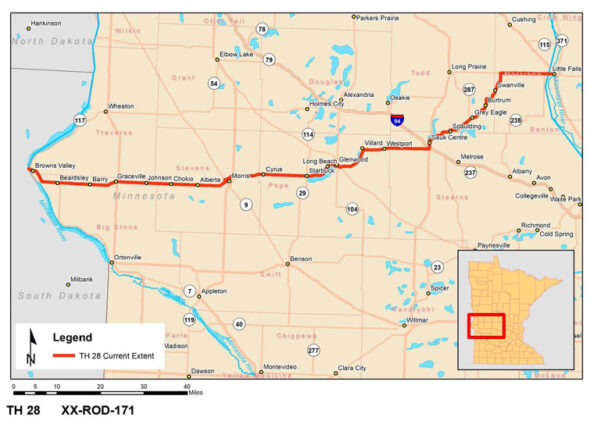
Map of Minnesota with route highlighted from east to west
Using GIS to overlay a series of older maps, the historic route of TH 28 was identified and mapped.

To assist with future planning, the MnDOT tasked our team with completing a study of the history of the state’s 213 historic-age Trunk Highways. We prepared a statewide historic context outlining the development of Minnesota’s Trunk Highways from their inception in 1921 to 1970. This work informed the development of a tailored methodology to apply the National Register Criteria for Evaluation specifically focused on identifying which highways are historically important. With so many highways across the state to consider, field survey and individual detailed highway research would have been extremely time consuming and costly.

To address this challenge, Mead & Hunt developed and applied a GIS-based screening process to assess roads and identify those with potential historic importance. This screening process served as a tool to more easily identify which roads had a potential association with historic themes, such as Entertainment/Recreation and Industry, and that warranted further work. The screening tool allowed us to identify and focus efforts on 39 of the 213 Trunk Highways that appeared to have associations with important themes and potential National Register eligibility. As important, this process allowed MnDOT to identify which roads did not possess significance and did not require further work.

After using GIS to screen Minnesota’s Trunk Highways, we continued to use GIS in our visual analysis while completing highway-specific evaluations and to assess the physical integrity to complete National Register eligibility recommendations for the individual Trunk Highways. The GIS-based methodology saved MnDOT time and cost by doing this work on all its Trunk Highways up front, rather on an individual case-by-case basis.

Key Takeaways

Pay it forward. We’ve developed best practices from our work for the MnDOT and on roads in many other states and use GIS whenever we evaluate historic roads. Our clients that need to address roads under Section 106 of the National Historic Preservation Act benefit from a tested process that saves time and money.

Share information. As an added benefit, this work was easily adapted for sharing information with the public. For example, after the project was completed, MnDOT developed a web-based statewide history, Minnesota’s Historic Trunk Highways, and a GIS-based storyboard, Historical Segments of Trunk Highways in Minnesota, which presents the history of the state’s trunk highways and highlights the roads found eligible in our project in an accessible and engaging manner.

Understand a complex resource. Our key takeaway is that using GIS greatly aids in understanding the histories of highways. While rarely straightforward, this tool streamlines an otherwise large or unwieldly process of completing National Register evaluations for long and complex properties. Thinking ahead, GIS provides an interactive and innovative way to visually convey this history by the agency to the public. GIS can even help develop mitigation when there are adverse effects to a National Register eligible road with online interpretive materials, such as these examples from MnDOT.

This post is part of our ongoing series sharing insights with you from our work on historic roads. Reach out and tell us what you think; we would love to hear from you.


Christina Slattery headshot

Christina Slattery

Christina specializes in historic preservation of transportation and engineering structures. She evaluates the significance of properties ranging from missile defense systems to road corridors, and develops creative mitigation strategies for projects.

Linkedin Envelope Readme
PrevPrevious
NextNext

Most Popular

Employee Perspective: Growing with the Florida Water Team
July 22, 2026
Unlocking Onsite Energy: Key Considerations for Distributed Generation
July 17, 2026
6 Ways Airports Can Make Travel Easier for People with Disabilities
July 16, 2026
Mead & Hunt Names Kristin Moore as CFO
July 10, 2026

Main Menu

  • Home
  • Markets
  • Services
  • Portfolio
  • News
  • About
  • Careers
  • Home
  • Markets
  • Services
  • Portfolio
  • News
  • About
  • Careers

Useful Links

  • Ebids
  • Corporate Responsibility
  • Equipment & Parts
  • GSA Schedules Program
  • Government Contract Vehicles
  • Policy for Third-Party Recruiters
  • Transparency in Coverage
  • Ebids
  • Corporate Responsibility
  • Equipment & Parts
  • GSA Schedules Program
  • Government Contract Vehicles
  • Policy for Third-Party Recruiters
  • Transparency in Coverage

Get in touch

  • Apply Today
  • Contact Us
  • Locations
  • Title VI
  • Apply Today
  • Contact Us
  • Locations
  • Title VI

Connect with us

Linkedin Facebook Instagram Vimeo

© 2026 Mead & Hunt, Inc. All rights reserved.

Privacy Settings | Privacy & CCPA Policy | Do Not Sell | Site Map